There’s nothing quite like the aroma of freshly popped popcorn filling your home, promising a delightful snack or movie night treat. However, that joyous anticipation can quickly turn to annoyance when your popcorn maker’s stirring rod starts to emit an unsettling squeak. A noisy stirring rod not only detracts from the experience but can also signal an underlying issue that, if left unaddressed, might lead to more significant problems. Fortunately, a squeaky stirring rod is often a straightforward fix, and with a bit of attention and the right approach, you can restore your popcorn maker to its smooth, quiet operation. This comprehensive guide will walk you through diagnosing the cause, gathering the necessary tools, and providing step-by-step instructions to banish that annoying squeak for good.
Understanding the Squeak: Common Causes of a Noisy Stirring Rod
A persistent squeak from your popcorn maker’s stirring rod isn’t just irritating; it’s a symptom that something isn’t quite right. Understanding the common culprits behind this noise is the first step toward a lasting solution. Primarily, friction is the number one cause. When moving parts lack adequate lubrication, or when their movement is impeded, they will often protest with a high-pitched squeal.
One frequent reason for increased friction is the buildup of food debris and old oil. Over time, tiny bits of unpopped kernels, caramelized sugar from seasoning, or dried, gummy residue from popping oil can accumulate around the stirring rod, its shaft, and the associated gears. This sticky accumulation creates resistance, forcing the motor to work harder and generating a squeaking or grinding sound as parts struggle to move freely.
Another significant factor can be misalignment of the stirring rod or its gears. If the rod gets slightly bent, or if the gears that drive its rotation become dislodged or improperly seated, they might scrape against other components or the kettle itself. Even a minor deviation can create enough friction to produce a noticeable squeak.
Lastly, worn or damaged components can also be a source of noise. Like any mechanical device, parts within your popcorn maker can degrade with extensive use. Springs designed to keep the agitator in place might weaken, bearings supporting the rod’s rotation could wear out, or the stirring rod itself might develop imperfections. In some cases, the agitator arm, which sweeps the bottom of the kettle, might begin scraping against the kettle’s surface if its position shifts or the kettle itself deforms slightly. Identifying the specific cause will guide you towards the most effective repair.
Essential Tools and Materials You’ll Need
Before you begin your repair, gathering the right tools and materials will ensure a smooth and efficient process. You likely have most of these items around your home already.
- Screwdriver set: A basic set including Phillips and flathead screwdrivers is usually sufficient for disassembling most small appliances.
- Small brushes: An old toothbrush or a small bottle brush is excellent for reaching into tight spaces and scrubbing away grime.
- Clean cloths or paper towels: Essential for cleaning and wiping away excess lubricant.
- Food-Grade Silicone Lubricant (NSF H-1 rated): This is perhaps the most crucial item. Unlike general-purpose lubricants, a food-grade lubricant is safe for incidental contact with food, which is vital for any kitchen appliance. Look for products explicitly labeled “NSF H-1” certified, as this designation ensures they meet safety standards for food processing equipment. Brands like Noble Chemical Lubriquik or AST™ Silicone Lubricant are common examples.
- Optional: Cotton swabs for extremely tight areas, and a small amount of isopropyl alcohol for dissolving stubborn, gummy grease before lubrication (ensure it evaporates completely before applying lubricant).
Step-by-Step Guide to Fixing Your Squeaky Stirring Rod
With your tools ready, it’s time to get your hands dirty and silence that squeak. Follow these steps carefully to ensure a successful repair.
Safety First: Unplug and Disassemble
|
Our Picks for the Best Popcorn maker in 2026
As an Amazon Associate I earn from qualifying purchases.
|
||
| Num | Product | Action |
|---|---|---|
| 1 | Original Whirley Pop Popcorn Machine – 3-Minute Stovetop Popcorn Maker for Home Movie Snacks & Game Night – Wabash Valley Farms – Aluminum Pot With Nylon Gears – (Silver) |

|
| 2 | West Bend Stir Crazy Hot Oil Popcorn Popper, Popcorn Maker Machine with Large Serving Bowl Lid and Stirring Rod Perfect for Movie Night Snack Time or Parties, 6-Quart, Red |
|
| 3 | VEVOR Commercial Popcorn Machine, 8 Oz Kettle, 850 W Countertop Popcorn Maker for 48 Cups per Batch, Theater Style Popper with 3-Switch Control Steel Frame Tempered Glass Doors 2 Scoops 2 Spoons, Red |
|
| 4 | Elite Gourmet EPM145M 18-cup Hot Oil Stirring Popcorn Popper w/Measuring Cap & Reversible Serving Bowl & Butter Melting Tray, Great for Parties, Movie Night, Anytime Snack, Safety ETL Approved, Mint |
|
| 5 | DASH Fresh Pop Popcorn Maker - Oil-Free, Air Popcorn Popper - With Measuring Cup & Recipe Guide - Perfect for Movie Nights - 16 Cups, Aqua |
|
| 6 | West Bend Stir Crazy Movie Theater Popcorn Popper, Gourmet Popcorn Maker Machine with Nonstick Popcorn Kettle, Measuring Tool and Popcorn Scoop for Popcorn Machine, 4 Qt., Black |
|
| 7 | DASH Fresh Pop Popcorn Maker - Oil-Free, Air Popcorn Popper - With Measuring Cup & Recipe Guide - Perfect for Movie Nights - 16 Cups, White |
|
| 8 | Ecolution Patented Micro-Pop Microwave Popcorn Popper with Temperature Safe Glass, 3-in-1 Lid Measures Kernels and Melts Butter, Made Without BPA, Dishwasher Safe, 3-Quart, Red |
|
| 9 | Presto 04863 Poplite Hot Air Popcorn Popper - Built-In Measuring Cup + Melts Butter, Easy to Clean, Built-In Cord Wrap, 18 Cups, Red |
|
| 10 | Elite Gourmet EPM330M Automatic Stirring 12-cup Popcorn Maker Popper, Hot Oil Popcorn Machine w/Measuring Cap & Built-in Reversible Serving Bowl, Great for Home Party Kids, Safety ETL Approved, Mint |
|
Before you touch any part of your popcorn maker for maintenance, always unplug it from the power outlet. This is a critical safety step to prevent electrical shock or accidental activation. Once unplugged, allow the machine to cool completely if it was recently used.
Next, carefully disassemble the popcorn maker. This typically involves removing the lid, then the kettle assembly from the main heating unit. Many stirring rods are designed to be removable for cleaning. If yours is, detach it according to your owner’s manual. For models where the stirring rod is integral to the kettle, you may need to access the gears from the underside or top housing, depending on the design. Refer to your appliance’s user manual for specific disassembly instructions.
Thorough Cleaning to Remove Buildup
With the stirring mechanism exposed, it’s time for a deep clean. Begin by inspecting the stirring rod, its shaft, the gears, and any surrounding areas for visible signs of old, hardened oil, carbonized residue, or stuck popcorn pieces. These accumulations are prime suspects for causing friction and noise.
Use your small brushes and clean cloths to meticulously scrub and wipe away all visible grime. Pay close attention to the points where the rod rotates or connects to the drive mechanism. For stubborn, gummy residues, especially around the gears, a small amount of isopropyl alcohol applied to a cloth or cotton swab can be very effective. Allow any alcohol to evaporate completely before proceeding to the next steps. A clean surface is essential for the lubricant to work effectively and prevent future buildup.
Inspect for Misalignment or Damage
Once clean, carefully inspect the components for any physical damage or misalignment.
- Stirring Rod: Is the rod perfectly straight, or does it appear bent or warped? A bent rod can scrape against the kettle or housing.
- Gears: Examine the gears for any broken teeth, cracks, or signs of excessive wear. Ensure they are properly seated and aligned. Some models might have small pins, clips, or half-moon pieces that lock the gears in place; verify these are present and secure.
- Springs and Bearings: Look for any weakened, stretched, or broken springs, particularly those that help maintain tension or position the agitator. Check for any loose or worn bushings or bearings where the rod passes through.
If you find any significantly damaged parts, replacement might be necessary. Minor bends in a stirring rod can sometimes be gently corrected, but proceed with caution to avoid further damage.
Applying Food-Grade Lubrication
Now that everything is clean and inspected, it’s time to lubricate. Remember, only use an NSF H-1 rated food-grade silicone lubricant. This type of lubricant is designed for incidental food contact, ensuring your popcorn remains safe for consumption.
Identify all the friction points. These typically include:
- Where the stirring rod shaft passes through any housing or bearing.
- The meshing points of any gears.
- Any pivot points or connections where moving parts rub together.
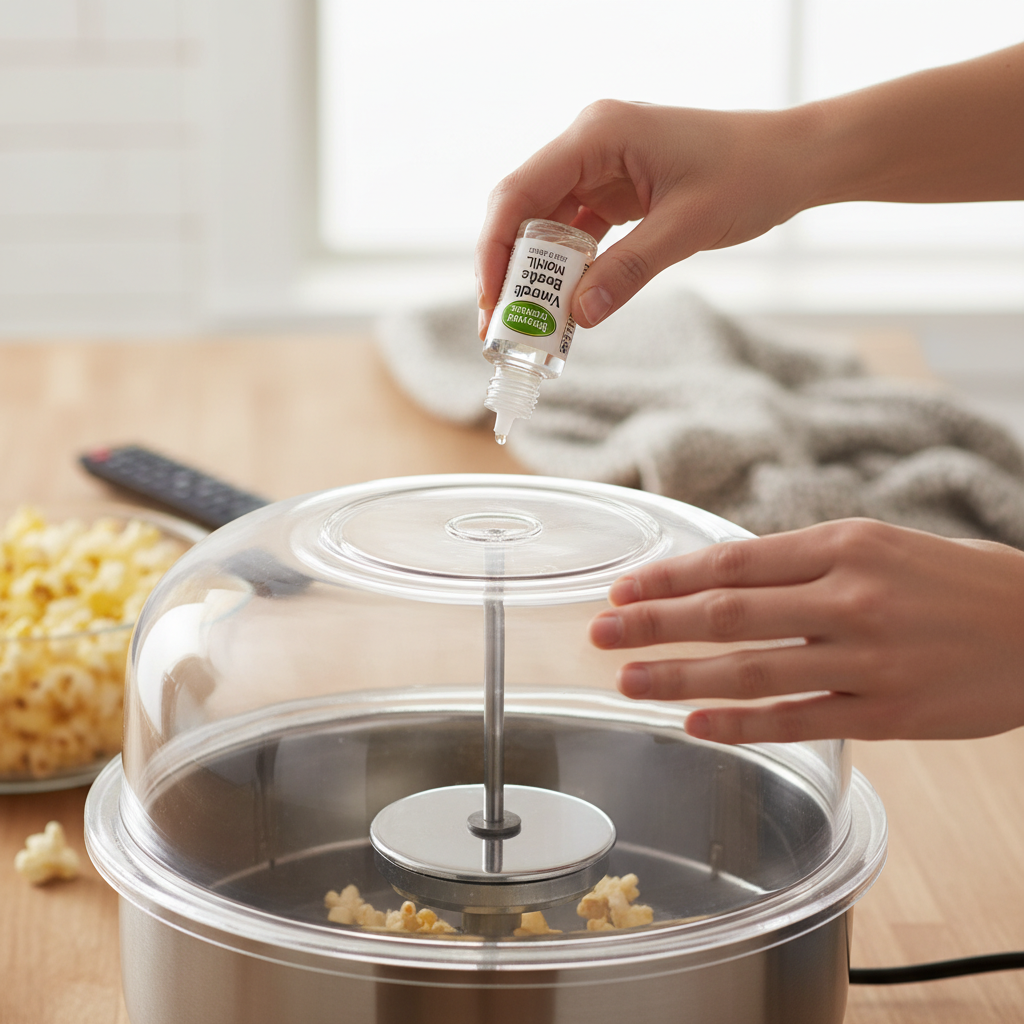
Apply a small, controlled amount of the food-grade silicone lubricant directly to these friction points. A little goes a long way; avoid over-applying, as excess lubricant can attract dust and debris, leading to future problems. After applying, manually rotate the stirring rod several times. This action helps to work the lubricant into the moving parts, distributing it evenly and ensuring thorough coverage. You should immediately feel a smoother movement and potentially hear a reduction in any residual squeak.
Reassembly and Testing
With cleaning, inspection, and lubrication complete, carefully reassemble your popcorn maker. Ensure all components are securely fastened and in their correct positions.
Once fully reassembled, plug the machine back into a power outlet. Turn on only the stirring mechanism (without heat or popcorn kernels) and listen intently. The squeak should be gone or significantly reduced. If the noise persists, unplug the machine again and carefully re-examine the friction points you lubricated. You might have missed a spot or a particularly stubborn area that requires a second application and more manual working of the lubricant. Test again until the stirring rod operates smoothly and quietly.
Preventive Maintenance for a Silent Popcorn Maker
Preventing the squeak from returning is much easier than fixing it repeatedly. Incorporating a few simple maintenance habits into your routine can keep your popcorn maker running smoothly and silently for years.
- Regular Cleaning: The most effective preventive measure is thorough cleaning after each use. Don’t let old oil, kernel fragments, or seasoning residue build up. A quick wipe-down of the kettle and stirring rod components will prevent gummy deposits from forming.
- Proper Oil Use: Always use the recommended amount and type of popping oil specified in your machine’s manual. Using too much oil can lead to excessive residue buildup, while too little can increase friction on the kettle surface and the stirring rod.
- Periodic Inspection: Before each use, take a moment to briefly inspect the stirring rod and gears. Look for any visible debris or signs of resistance. Giving the rod a manual spin can quickly tell you if it’s moving freely or if there’s any stiffness developing. If you use your machine frequently, a light, preventive application of food-grade lubricant every few months, after a thorough cleaning, can be beneficial, even if no squeak is present.
When to Call a Professional or Consider Replacement
While many squeaking stirring rod issues are easily resolved with DIY care, there are instances when professional help or even a machine replacement might be the best course of action.
Consider consulting a professional appliance repair technician if:
- You’ve thoroughly followed all cleaning and lubrication steps, but the squeak persists or worsens.
- You identify significant damage to critical components, such as the motor, main drive gears, or the primary shaft, which are complex to repair yourself.
- You’re uncomfortable with the disassembly process or the idea of working with internal components.
It’s also wise to consider replacing your popcorn maker if:
- The cost of replacement parts or professional repair approaches or exceeds the cost of a new machine.
- Your machine is very old, and other components are also showing signs of wear and tear, indicating it might be nearing the end of its lifespan.
- Major internal components, like the motor, are failing, as these are often costly to replace and may signal broader issues.
Conclusion
A squeaky stirring rod is a common nuisance for popcorn maker owners, but it’s typically a minor issue with a straightforward fix. By systematically cleaning away accumulated debris, carefully inspecting for misalignment or damage, and applying a suitable food-grade lubricant, you can often restore your machine to perfect working order. Regular preventive maintenance, especially thorough cleaning after each use, will help ensure your popcorn maker remains a source of quiet, delicious enjoyment. Don’t let a minor squeak ruin your popcorn experience; take these simple steps to ensure your machine is perfectly popping every time.
Frequently Asked Questions
Why is my popcorn maker stirring rod making a grinding noise instead of a squeak?
A grinding noise often indicates a more serious issue than a simple squeak. It typically suggests significant debris caught within the gears, metal-on-metal contact due to severe wear, or potentially broken gear teeth. Disassemble the unit to thoroughly inspect for obstructions or damaged components immediately.
Can I use regular cooking oil to lubricate my popcorn maker’s stirring rod?
No, it is strongly advised against using regular cooking oils for lubrication. Cooking oils can become sticky, gummy, and even rancid over time, attracting more debris and worsening the problem by creating a resistant buildup. Always use an NSF H-1 rated food-grade silicone lubricant specifically designed for kitchen equipment.
How often should I lubricate my popcorn maker’s stirring rod?
Lubrication is generally needed only when a squeak develops, indicating friction. Regular and thorough cleaning after each use is the most critical preventive measure. However, if you use your machine very frequently, a light, preventive application of food-grade lubricant every few months, after cleaning, can help maintain smooth operation.
Is it difficult to replace a popcorn maker stirring rod?
The difficulty of replacing a stirring rod varies significantly by popcorn maker model and design. Many stirring rods are designed for relatively easy removal and replacement, often requiring only a few screws or simple detachment. Always consult your machine’s user manual for specific instructions and diagrams for replacement.