Are you a popcorn enthusiast who’s ever wondered if there’s a real difference between the white and yellow kernels lining the grocery store shelves? You’re not alone. While both varieties promise that satisfying crunch, the truth is, the type of popcorn kernel you choose can profoundly influence your snacking experience, from texture and flavor to how well it holds your favorite toppings. As a seasoned technician in home appliances with over a decade of experience, I’ve explored the nuances of every pop, and I’m here to guide you through the exciting world of popcorn kernels to help you select the ideal match for your palate and popping needs.
Understanding Popcorn Kernels: A Quick Overview
Popcorn kernels are not just any corn; they come from a special variety of flint corn called Zea mays everta, uniquely designed to burst when heated. This transformation occurs because each kernel contains a small amount of water and starch, which turns to steam under heat, building pressure until the outer shell ruptures. The starch then puffs out, creating the fluffy snack we all adore. While many types exist, white and yellow kernels remain the most popular choices for home poppers and commercial operations alike, including movie theaters.
White Popcorn Kernels: Delicate & Tender
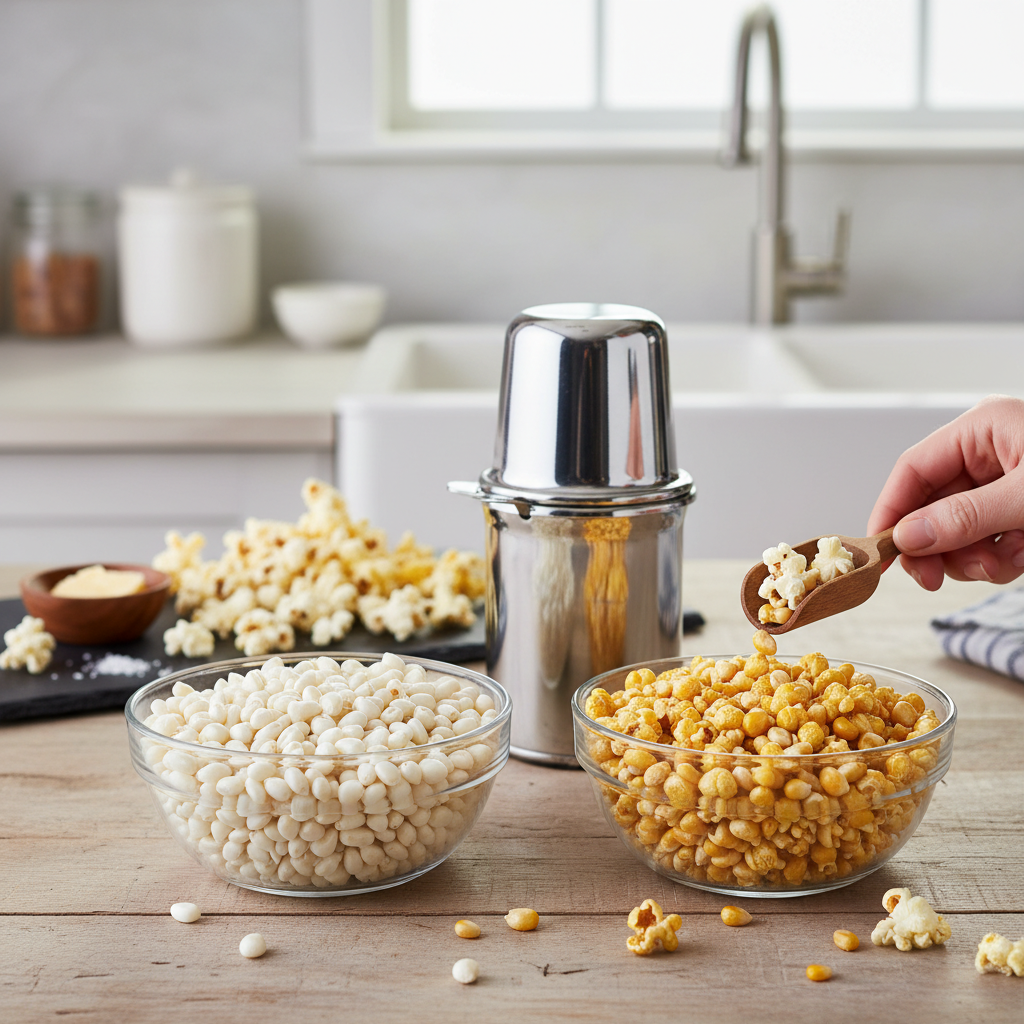
White popcorn kernels are the connoisseur’s choice for a lighter, more subtle popcorn experience. Visually, unpopped white kernels are typically smaller and more oblong, often with a slightly translucent shell.
When popped, white popcorn yields smaller, brighter white, and more delicate flakes. These pieces have a noticeably softer, airy mouthfeel and less crunch compared to their yellow counterparts. The thinner outer layer, or pericarp, means fewer hulls get stuck in your teeth, offering a smoother snacking experience. Flavor-wise, white popcorn boasts a subtle, often slightly sweet or nutty taste that’s relatively neutral. This makes it an exceptional canvas for light seasonings, allowing other flavors to truly shine without being overpowered by a strong “corny” taste.
White popcorn is ideal for those who prefer a gentle, melt-in-your-mouth texture or desire a base that readily absorbs various seasonings and offers even butter distribution.
Yellow Popcorn Kernels: Classic & Crunchy
Yellow popcorn kernels are the undisputed champions of the classic movie theater experience, known for their robust presence and satisfying texture. Unpopped, these kernels are generally larger and rounder than white kernels, sporting a distinct sunny yellow hue from naturally occurring carotenoids like xanthophylls and carotene.
Once popped, yellow kernels transform into larger, fluffier, and sturdier pieces, often exhibiting a butterfly or “snowflake” shape with irregular “wings”. These substantial flakes offer a crispier, denser feel and a fuller bite. Their thicker hulls contribute to a more pronounced crunch and durability, making them incredibly resistant to breaking. Yellow popcorn typically features a richer, more robust corn flavor, often described as nutty and buttery, even before any toppings are added. This inherent flavor and sturdiness are precisely why movie theaters overwhelmingly favor yellow popcorn; it holds up magnificently to generous amounts of hot, melted butter and other heavy toppings, delivering that irresistible, full-bodied treat.
White vs. Yellow Popcorn: A Detailed Comparison
Deciding between white and yellow popcorn ultimately comes down to your personal preference for texture, flavor, and how you plan to dress your snack. Here’s a detailed breakdown to help you compare:
| Feature | White Popcorn | Yellow Popcorn |
|---|---|---|
| Kernel Size | Smaller, oblong | Larger, rounder |
| Popped Size | Smaller, more delicate flakes | Larger, fluffier, more substantial flakes |
| Texture | Softer, more tender, airy, fewer noticeable hulls | Crispier, crunchier, denser, sturdier, thicker hulls |
| Flavor Profile | Subtle, delicate, mildly sweet/nutty, neutral base | Robust, classic corn flavor, distinctly nutty/buttery |
| Hull | Thinner, less prominent, often disintegrates | Thicker, more pronounced |
| Best Use | Light snacking, delicate seasonings, fewer hulls | Movie theater style, heavy toppings, caramel corn |
| Appearance | Bright white when popped | Slight yellowish tint when popped |
Beyond White and Yellow: Exploring Other Popcorn Varieties
While white and yellow corn dominate, the world of popcorn offers more intriguing choices, especially concerning popped shapes and specialty kernels.
Popped Popcorn Shapes: Butterfly vs. Mushroom
The shape a kernel takes after popping is crucial for both texture and topping adhesion.
- Butterfly Popcorn (Snowflake Popcorn): This is the most common shape, characterized by irregular “wings” that make it airy and light. Its nooks and crannies are excellent for catching butter and fine seasonings, making it the go-to for classic movie theater popcorn. However, these wings can be fragile and break easily.
- Mushroom Popcorn: Distinctly round and compact, mushroom popcorn is much sturdier and more resistant to crumbling. This robust shape makes it the ideal choice for confections like caramel corn, kettle corn, or any heavily coated popcorn, as it holds up exceptionally well under glazes and thick sauces.
|
Our Picks for the Best Popcorn maker in 2026
As an Amazon Associate I earn from qualifying purchases.
|
||
| Num | Product | Action |
|---|---|---|
| 1 | Ecolution Patented Micro-Pop Microwave Popcorn Popper with Temperature Safe Glass, 3-in-1 Lid Measures Kernels and Melts Butter, Made Without BPA, Dishwasher Safe, 3-Quart, Red |

|
| 2 | VEVOR Commercial Popcorn Machine, 8 Oz Kettle, 850 W Countertop Popcorn Maker for 48 Cups per Batch, Theater Style Popper with 3-Switch Control Steel Frame Tempered Glass Doors 2 Scoops 2 Spoons, Red |
|
| 3 | DASH Fresh Pop Popcorn Maker - Oil-Free, Air Popcorn Popper - With Measuring Cup & Recipe Guide - Perfect for Movie Nights - 16 Cups, Aqua |
|
| 4 | West Bend Stir Crazy Hot Oil Popcorn Popper, Popcorn Maker Machine with Large Serving Bowl Lid and Stirring Rod Perfect for Movie Night Snack Time or Parties, 6-Quart, Red |
|
| 5 | Original Whirley Pop Popcorn Machine – 3-Minute Stovetop Popcorn Maker for Home Movie Snacks & Game Night – Wabash Valley Farms – Aluminum Pot With Nylon Gears – (Silver) |
|
| 6 | Elite Gourmet EPM330M Automatic Stirring 12-cup Popcorn Maker Popper, Hot Oil Popcorn Machine w/Measuring Cap & Built-in Reversible Serving Bowl, Great for Home Party Kids, Safety ETL Approved, Mint |
|
| 7 | Presto 04863 Poplite Hot Air Popcorn Popper - Built-In Measuring Cup + Melts Butter, Easy to Clean, Built-In Cord Wrap, 18 Cups, Red |
|
| 8 | DASH Fresh Pop Popcorn Maker - Oil-Free, Air Popcorn Popper - With Measuring Cup & Recipe Guide - Perfect for Movie Nights - 16 Cups, White |
|
| 9 | West Bend Stir Crazy Movie Theater Popcorn Popper, Gourmet Popcorn Maker Machine with Nonstick Popcorn Kettle, Measuring Tool and Popcorn Scoop for Popcorn Machine, 4 Qt., Black |
|
| 10 | Elite Gourmet EPM145M 18-cup Hot Oil Stirring Popcorn Popper w/Measuring Cap & Reversible Serving Bowl & Butter Melting Tray, Great for Parties, Movie Night, Anytime Snack, Safety ETL Approved, Mint |
|
Specialty Kernels
Beyond the standard, several specialty kernels offer unique experiences:
- Blue Popcorn: Despite their striking blue-purple unpopped color, these kernels pop white. They offer a noticeably nuttier flavor with a sweet undertone and a crunchier, denser texture than yellow popcorn. Blue popcorn is also rich in anthocyanin, a potent antioxidant.
- Red Popcorn: Like blue popcorn, red kernels (burgundy in color) pop white. They typically yield a rich, nutty flavor with subtle sweet notes and a hint of earthiness. Red kernels often produce a denser popcorn with a slightly thicker hull, providing a satisfying crunch.
- Hulless Varieties: For those who despise hulls getting stuck in their teeth, “virtually hulless” popcorn varieties are a game-changer. While no popcorn is truly hull-free, these kernels are bred to have thinner, more delicate hulls that tend to shatter and disintegrate upon popping, offering a smoother, less bothersome eating experience.
Choosing the Best Popcorn Kernels for Your Preference
Selecting the perfect popcorn kernel is a personal journey, guided by your desired snack profile.
- Consider Your Desired Texture: If you crave a tender, airy, melt-in-your-mouth experience with minimal hull interference, white popcorn is your best bet. For a hearty crunch and a sturdier flake that stands up to rich toppings, yellow popcorn is the clear winner.
- Consider Your Flavor Preference: Do you prefer a mild, delicate base that lets your seasonings shine? Opt for white kernels. If you enjoy a robust, classic corn taste that can hold its own, yellow kernels are likely more to your liking.
- Consider Your Topping Style: For light dusting of salt or subtle spice blends, white popcorn works beautifully. If you’re a fan of generous butter, caramel, cheese, or other heavy glazes, the structural integrity of yellow (especially mushroom-shaped) popcorn will be invaluable.
- Popping Method: While both white and yellow kernels perform well across various popping methods (air poppers, stovetop, machine poppers), the inherent characteristics remain. An air popper will best highlight the subtle differences in texture and flavor, as it uses no oil.
Top Popcorn Kernel Brands for 2026
The market offers an array of high-quality popcorn kernel brands, each with its loyal following. Many enthusiasts swear by Amish Country Popcorn for its wide variety of unique types, including hulless options and specialty colors. Orville Redenbacher’s remains a household name, consistently delivering reliable, large-popping kernels. Bob’s Red Mill offers quality white and yellow varieties, often praised for their consistent pop. Other reputable brands like Snappy and Jolly Time are also popular choices, with some even specializing in gourmet options like Fireworks Popcorn with unique “Ruby Red” and “High Mountain Midnight” varieties. When choosing, consider buying smaller quantities to experiment and find your personal favorite.
Tips for Achieving the Perfect Pop
Regardless of your kernel choice, a few best practices can elevate your popcorn game:
- Storage is Key: Store unpopped kernels in an airtight container in a cool, dark place to maintain their moisture content, which is vital for a successful pop. Avoid refrigeration as it can dry them out.
- Optimal Temperature: Achieving the right popping temperature is crucial. Too low, and you’ll get many unpopped kernels; too high, and they might burn. Aim for a quick, consistent heat.
- Use Quality Oil (for oil popping): Coconut oil and good quality vegetable oils are excellent choices for stovetop or machine popping, enhancing flavor and heat transfer.
- Don’t Overcrowd: Give your kernels space to expand. Overcrowding a pot or popper can lead to uneven popping and more unpopped kernels.
- Seasoning Strategy: For best adhesion, season your popcorn immediately after it’s popped, while it’s still warm and slightly steamy.
Conclusion
The journey to finding your perfect popcorn kernel is a delightful exploration of texture, flavor, and personal preference. Whether you lean towards the delicate tenderness and subtle taste of white popcorn, or the robust crunch and classic appeal of yellow popcorn, both offer a satisfying snacking experience. Remember that specialty varieties and different popped shapes further expand your options, allowing for endless customization. So, don’t hesitate to experiment with different types and brands to discover what truly makes your taste buds sing. What will be your go-to popcorn kernel for your next movie night?
Frequently Asked Questions
Is yellow or white popcorn healthier?
From a nutritional standpoint, white and yellow popcorn are nearly identical when air-popped. Both are whole grains, low in fat and calories, and good sources of fiber. Yellow kernels may contain slightly more antioxidants due to their carotenoid content, but the difference is minimal. The health impact largely depends on your popping method and the amount of oil, butter, and seasonings you add [cite: 1, concise_search 2].
What is the difference between butterfly and mushroom popcorn?
Butterfly popcorn, also known as snowflake popcorn, has an irregular shape with “wings” that are light and airy, commonly found in movie theaters. Mushroom popcorn is round and sturdy, making it ideal for holding heavy coatings like caramel or chocolate, and is often preferred for gourmet popcorn confections.
Can you use any corn to make popcorn?
No, only specific varieties of flint corn, known as Zea mays everta, can be popped. Sweet corn or field corn used for livestock will not pop, as they lack the hard outer shell and ideal moisture content necessary for the popping process.
Do “hulless” popcorn kernels truly have no hulls?
No popcorn kernel is truly hull-free, as the hull is an essential part of the kernel’s structure. However, “virtually hulless” varieties are specially cultivated to have thinner, more delicate hulls that break into much smaller pieces or disintegrate during popping, resulting in a significantly smoother and less noticeable hull experience.