Understanding how different materials conduct and distribute heat is paramount in countless applications, from the kitchen to advanced engineering. Aluminum and steel, two of the most widely used metals, possess vastly different thermal properties that dictate their suitability for specific tasks. While aluminum is celebrated for its rapid heat transfer and even distribution, steel offers superior heat retention and structural integrity at higher temperatures. Choosing between them requires a deep dive into their intrinsic characteristics and how these translate into real-world performance.
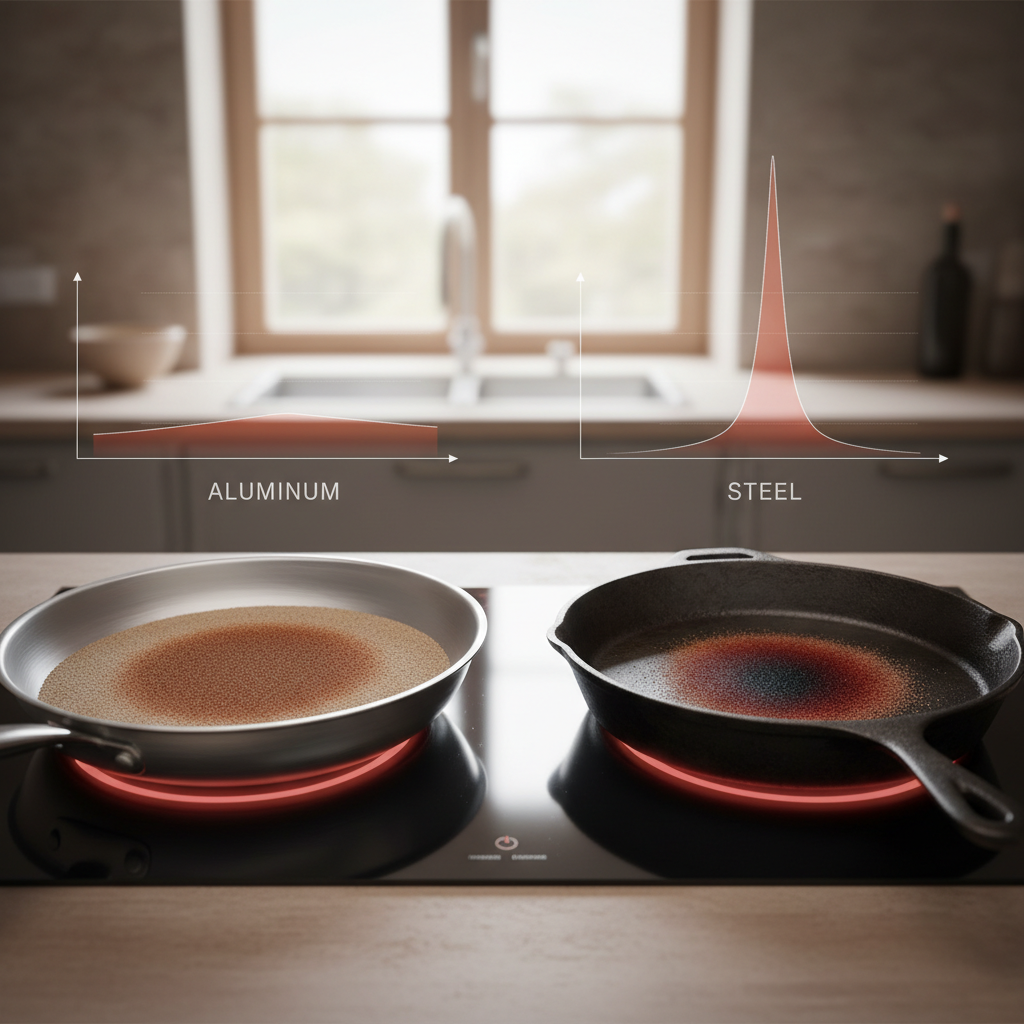
Understanding Thermal Properties: The Foundation of Heat Distribution
Heat distribution in a material is governed by several key thermal properties. These properties quantify how quickly and efficiently a material absorbs, transfers, and releases thermal energy. A clear grasp of these concepts is essential to appreciate the distinctions between aluminum and steel.
Thermal Conductivity
|
Our Picks for the Best Popcorn maker in 2026
As an Amazon Associate I earn from qualifying purchases.
|
||
| Num | Product | Action |
|---|---|---|
| 1 | Elite Gourmet EPM330M Automatic Stirring 12-cup Popcorn Maker Popper, Hot Oil Popcorn Machine w/Measuring Cap & Built-in Reversible Serving Bowl, Great for Home Party Kids, Safety ETL Approved, Mint |

|
| 2 | DASH Fresh Pop Popcorn Maker - Oil-Free, Air Popcorn Popper - With Measuring Cup & Recipe Guide - Perfect for Movie Nights - 16 Cups, Aqua |
|
| 3 | Presto 04863 Poplite Hot Air Popcorn Popper - Built-In Measuring Cup + Melts Butter, Easy to Clean, Built-In Cord Wrap, 18 Cups, Red |
|
| 4 | VEVOR Commercial Popcorn Machine, 8 Oz Kettle, 850 W Countertop Popcorn Maker for 48 Cups per Batch, Theater Style Popper with 3-Switch Control Steel Frame Tempered Glass Doors 2 Scoops 2 Spoons, Red |
|
| 5 | West Bend Stir Crazy Hot Oil Popcorn Popper, Popcorn Maker Machine with Large Serving Bowl Lid and Stirring Rod Perfect for Movie Night Snack Time or Parties, 6-Quart, Red |
|
| 6 | Elite Gourmet EPM145M 18-cup Hot Oil Stirring Popcorn Popper w/Measuring Cap & Reversible Serving Bowl & Butter Melting Tray, Great for Parties, Movie Night, Anytime Snack, Safety ETL Approved, Mint |
|
| 7 | Ecolution Patented Micro-Pop Microwave Popcorn Popper with Temperature Safe Glass, 3-in-1 Lid Measures Kernels and Melts Butter, Made Without BPA, Dishwasher Safe, 3-Quart, Red |
|
| 8 | Original Whirley Pop Popcorn Machine – 3-Minute Stovetop Popcorn Maker for Home Movie Snacks & Game Night – Wabash Valley Farms – Aluminum Pot With Nylon Gears – (Silver) |
|
| 9 | West Bend Stir Crazy Movie Theater Popcorn Popper, Gourmet Popcorn Maker Machine with Nonstick Popcorn Kettle, Measuring Tool and Popcorn Scoop for Popcorn Machine, 4 Qt., Black |
|
| 10 | DASH Fresh Pop Popcorn Maker - Oil-Free, Air Popcorn Popper - With Measuring Cup & Recipe Guide - Perfect for Movie Nights - 16 Cups, White |
|
Thermal conductivity (measured in Watts per meter-Kelvin, W/mK) defines a material’s ability to transfer heat. A higher value indicates more efficient heat transfer. Aluminum, in its pure form, boasts a thermal conductivity of approximately 235-250 W/mK. Even aluminum alloys, while slightly less conductive, still range around 150-170 W/mK. In stark contrast, stainless steel exhibits a much lower thermal conductivity, typically between 15-30 W/mK, with carbon steel slightly higher at 45-58 W/mK. This significant difference means that aluminum transfers heat far more rapidly than steel, making it ideal for applications requiring quick temperature changes or uniform heating across a surface.
Thermal Diffusivity
Thermal diffusivity (measured in square millimeters per second, mm²/s) describes how quickly temperature changes propagate through a material. It’s a measure of a material’s ability to conduct thermal energy relative to its ability to store thermal energy. Materials with high thermal diffusivity allow heat to spread rapidly, preventing localized hot spots. Pure aluminum has a thermal diffusivity of about 84.18 mm²/s, with common alloys around 60-70 mm²/s. Stainless steel, on the other hand, has a significantly lower thermal diffusivity, approximately 4.2 mm²/s. This demonstrates why aluminum excels at quickly spreading heat evenly, while steel is prone to developing temperature gradients and hot spots if heat is applied unevenly.
Specific Heat Capacity
Specific heat capacity (measured in Joules per kilogram-Kelvin, J/kgK) quantifies the amount of heat energy required to raise the temperature of a unit mass of a substance by one degree. Aluminum generally has a higher specific heat capacity per unit mass (around 900 J/kgK) compared to steel (around 500 J/kgK). This implies that, for the same mass, aluminum requires more energy to increase its temperature. However, it’s important to consider density. Aluminum is roughly one-third the density of steel. Therefore, for a given volume, a piece of aluminum will often absorb less total heat energy to reach a certain temperature than a piece of steel, despite its higher specific heat capacity per unit mass. This property influences how quickly an object heats up and how long it retains that heat.
Aluminum’s Heat Distribution Profile: Rapid and Even
Aluminum’s superior thermal conductivity and diffusivity make it an exceptional material for applications demanding quick and uniform heat distribution. Its atomic structure allows free electrons to efficiently transfer thermal energy throughout the material.
Advantages:
- Rapid Heating and Cooling: Aluminum heats up and cools down quickly, offering precise temperature control. This is invaluable in processes where rapid adjustments are necessary.
- Even Heat Spreading: Heat applied to one part of an aluminum object quickly disperses across its entire surface, minimizing hot spots and ensuring consistent heating.
- Lightweight: Being significantly lighter than steel, aluminum is preferred in applications where weight is a critical factor, such as in aerospace or portable devices, without compromising thermal performance.
Disadvantages:
- Lower Melting Point: Aluminum has a relatively low melting point (around 660°C) compared to steel. This limits its use in extremely high-temperature environments where structural integrity must be maintained.
- Higher Thermal Expansion: Aluminum expands and contracts more significantly with temperature fluctuations. In certain engineering contexts, especially when joined with other materials, this higher thermal expansion coefficient can lead to challenges like warping or stress.
Steel’s Heat Distribution Profile: Controlled and Retentive
Steel, particularly stainless steel, offers a different set of thermal advantages, primarily revolving around its strength at high temperatures and its ability to retain heat. Its lower thermal conductivity, while a disadvantage for rapid spreading, can be an advantage for insulation.
Advantages:
- High Melting Point: Steel boasts a much higher melting point (ranging from 1370°C to 1510°C), making it ideal for structural components in very high-temperature environments, such as furnaces and engine parts.
- Excellent Heat Retention: Once heated, steel retains its temperature for a longer period due to its lower thermal diffusivity and higher mass per volume. This is beneficial for processes requiring sustained heat.
- Structural Strength: Steel maintains its strength and rigidity at elevated temperatures better than aluminum, which can soften.
Disadvantages:
- Slower Heating and Cooling: Steel takes longer to heat up and cool down due to its lower thermal conductivity. This can be a drawback when precise, rapid temperature adjustments are needed.
- Uneven Heat Distribution: Without a more conductive core (as in clad cookware), steel can develop localized hot spots, leading to uneven cooking or heating.
- Heavier: For a given volume, steel is considerably heavier than aluminum, which can be a limiting factor in weight-sensitive designs.
Comparative Analysis: Aluminum vs. Steel
| Property | Aluminum | Steel (Stainless Steel/Carbon Steel) |
|---|---|---|
| Thermal Conductivity | High (150-250 W/mK) | Low to Moderate (15-58 W/mK) |
| Thermal Diffusivity | High (60-85 mm²/s) | Low (4.2 mm²/s for Stainless) |
| Specific Heat Capacity (per mass) | Higher (approx. 900 J/kgK) | Lower (approx. 500 J/kgK) |
| Melting Point | Lower (approx. 660°C) | Higher (approx. 1370-1510°C) |
| Weight | Lightweight (approx. 1/3 of steel) | Heavy |
| Heat Distribution | Rapid and even | Slower, prone to hot spots (without cladding) |
| Heat Retention | Poor to moderate | Good |
| Corrosion Resistance | Good (forms protective oxide layer) | Poor (carbon steel), Excellent (stainless steel) |
Real-World Applications: Where Each Material Shines
The distinct thermal properties of aluminum and steel lead to their widespread use in different industries and everyday objects. Understanding these applications helps illustrate their strengths.
Cookware and Culinary Arts
In the culinary world, the choice between aluminum and steel significantly impacts cooking performance. Aluminum is a favorite for many cooks due to its ability to heat up quickly and distribute heat evenly across the entire surface of a pan. This prevents burning and ensures consistent results, particularly for delicate sauces or searing. Steel, especially stainless steel, is valued for its durability, non-reactivity with acidic foods, and aesthetic appeal. However, its lower thermal conductivity can lead to hot spots. To harness the best of both worlds, many high-quality cookware pieces feature clad construction, where a core of aluminum (or copper) is sandwiched between layers of stainless steel, offering even heat distribution with a durable, non-reactive cooking surface.
Electronics and Heat Management
Aluminum is an indispensable material in the electronics industry. Its high thermal conductivity makes it the material of choice for heat sinks, which dissipate heat away from crucial electronic components like CPUs and GPUs. This efficient heat transfer prevents overheating and prolongs the lifespan of electronic devices. Aluminum’s lightweight nature also makes it suitable for electronic enclosures and cooling systems in portable devices where minimizing weight is key.
Industrial and Structural Engineering
For industrial and structural applications, steel often takes precedence due to its superior strength and high melting point. In environments subjected to extreme temperatures, such as furnaces, engines, and industrial machinery, steel components can maintain their structural integrity where aluminum would soften or melt. Carbon steel, while susceptible to rust, is used for its strength and moderate thermal conductivity in general construction. Stainless steel finds its niche in corrosive environments or architectural applications where both durability and aesthetics are important. Meanwhile, aluminum’s excellent strength-to-weight ratio and corrosion resistance make it invaluable in aerospace and automotive industries, where lightweight yet robust materials are essential.
Key Factors in Material Selection for Thermal Performance
When deciding between aluminum and steel for a project, several critical factors beyond just thermal properties must be weighed.
Operating Temperature Ranges
The expected operating temperature is perhaps the most crucial consideration. If the application involves extremely high temperatures (above aluminum’s melting point), steel is the clear choice for structural stability. Conversely, if rapid heat dissipation at moderate temperatures is paramount, aluminum’s superior conductivity makes it more effective.
Weight and Structural Requirements
For designs where weight reduction is a priority, such as in aerospace, automotive, or portable electronics, aluminum offers an unparalleled strength-to-weight ratio. However, if sheer structural strength, rigidity, and resistance to deformation under load are the primary concerns, especially in heavy-duty or high-stress environments, steel will generally outperform aluminum.
Cost and Durability Considerations
The cost of materials can significantly influence the final decision. Generally, carbon steel is less expensive per pound than most aluminum alloys, though prices fluctuate. Durability, including resistance to corrosion and wear, also plays a role. While plain carbon steel requires protective coatings to prevent rust, aluminum forms a protective oxide layer, and stainless steel offers excellent corrosion resistance, albeit at a higher cost. The longevity and maintenance requirements of the finished product should be factored into the overall material selection.
Optimizing Heat Transfer: Tips and Best Practices
Achieving optimal heat transfer and distribution involves more than just selecting the right material; design and surface treatments also play a crucial role. For materials like aluminum, surface finishes such as anodizing can enhance emissivity, improving radiative heat transfer. Thickness is another factor: while highly conductive materials like aluminum benefit from being thicker to spread heat over a larger area, excessively thick steel can exacerbate its slow heating properties. Careful design, including fin geometry for heat sinks or multi-ply construction for cookware, allows engineers and manufacturers to leverage the specific thermal advantages of each material.
Conclusion: Making the Right Choice for Heat Distribution
The comparison between aluminum and steel for heat distribution reveals two materials with distinct thermal personalities. Aluminum shines when rapid, even heat transfer and lightweight properties are desired, making it indispensable in modern cookware, electronics, and transportation. Steel, with its high melting point, structural strength, and heat retention capabilities, is the go-to for demanding industrial and structural applications where extreme temperatures and durability are key. Ultimately, the “better” material isn’t absolute; it’s entirely dependent on the specific needs of the application, balancing thermal performance with mechanical strength, weight, cost, and environmental factors. By understanding these fundamental differences, engineers and consumers alike can make informed decisions, ensuring optimal performance and longevity for their projects and products.
What project or application are you considering these materials for, and which thermal property is most critical for your needs?
Câu Hỏi Thường Gặp
Does aluminum hold heat better than steel?
Generally, steel tends to hold heat better and for a longer duration than aluminum once both are heated to the same temperature. This is because steel has a lower thermal diffusivity and often a higher specific heat capacity per unit volume, allowing it to retain thermal energy more effectively and release it more slowly. Aluminum, with its high thermal conductivity, disperses heat rapidly, which also means it loses heat quickly.
Which metal is better for cooking, aluminum or steel?
For cooking, the “better” metal depends on the specific dish and desired outcome. Aluminum is excellent for quick, even heating and browning due to its high thermal conductivity. Stainless steel is preferred for its durability, non-reactivity, and ease of cleaning. Often, the best solution in cookware is a combination: stainless steel exteriors with an aluminum (or copper) core for optimal heat distribution and retention.
Why is aluminum used in heat sinks instead of steel?
Aluminum is used extensively in heat sinks because of its exceptionally high thermal conductivity and low density. Heat sinks are designed to rapidly draw heat away from electronic components and dissipate it into the surrounding air. Aluminum’s ability to quickly transfer heat and its lightweight nature make it far more effective for this purpose than steel, which would be slower and much heavier.
What are the main disadvantages of using aluminum for high-temperature applications?
The primary disadvantage of aluminum for high-temperature applications is its relatively low melting point (around 660°C) compared to steel. Beyond this temperature, aluminum loses its structural integrity and can melt. Additionally, aluminum has a higher coefficient of thermal expansion, meaning it expands and contracts more with temperature changes, which can be problematic in assemblies involving different materials.
Does the thickness of the metal affect heat distribution?
Yes, the thickness of the metal significantly affects heat distribution. For highly conductive materials like aluminum, increasing thickness can help spread heat more evenly over a larger area. For less conductive materials like steel, a thicker gauge will slow down heating but can also improve heat retention. In clad cookware, the thickness of the conductive core (often aluminum) is critical for effective heat distribution.